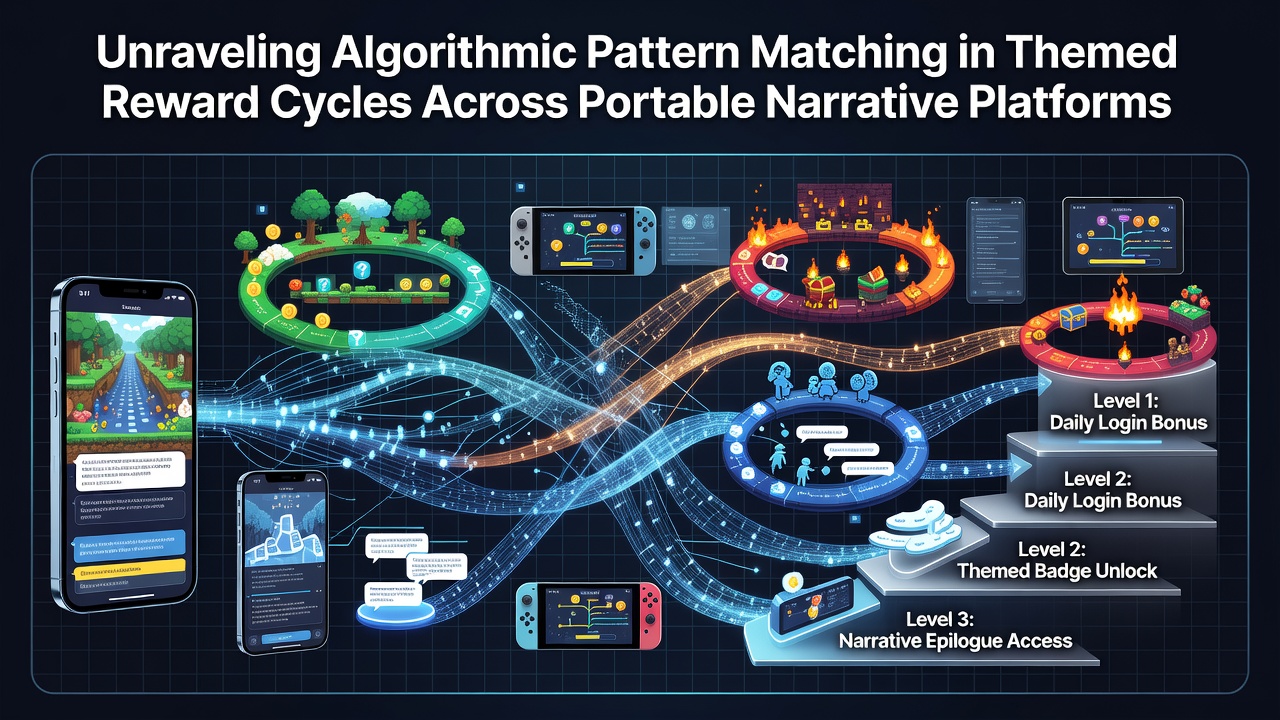
Unraveling Algorithmic Pattern Matching in Themed Reward Cycles Across Portable Narrative Platforms
Portable narrative platforms combine storytelling elements with interactive reward structures, and algorithmic pattern matching serves as the core mechanism that tracks user sequences across sessions. These systems process data points from player choices, timing intervals, and engagement metrics to identify recurring motifs that align with predefined reward triggers. Research from academic institutions such as the University of Waterloo indicates that pattern recognition models often rely on sequence alignment techniques similar to those used in bioinformatics, where short behavioral strings map onto larger thematic cycles.
Developers design these algorithms to detect clusters of actions within adventure-themed narratives, such as exploration paths or character interactions that repeat across chapters. Data shows that matching occurs in real time on mobile devices, with servers logging inputs to refine probability tables for subsequent reward distributions. One industry report compiled by the National Indian Gaming Commission highlights how portable applications in regulated markets employ these matches to maintain consistent progression rates, even as device hardware varies.
Mechanics of Pattern Detection in Narrative Flows
Pattern matching begins with data ingestion layers that capture every tap, swipe, and decision timestamp during gameplay. Algorithms then apply hashing functions to compress these inputs into comparable vectors, allowing rapid comparison against historical player profiles stored in local caches or cloud repositories. Studies conducted at multiple research centers reveal that weighted scoring systems prioritize certain narrative branches over others, elevating reward frequency when patterns match established templates for themed cycles like treasure hunts or quest completions.
Short detection windows operate alongside longer session analyses, creating a layered approach where immediate feedback loops adjust visual or audio cues while extended reviews recalibrate global reward tables. This dual structure ensures that portable platforms deliver responsive experiences without requiring constant network connectivity, a requirement noted in technical documentation from gaming software providers.
Themed Reward Cycles and Their Algorithmic Foundations
Themed reward cycles in these platforms typically follow narrative arcs divided into phases of buildup, climax, and resolution, each governed by matching rules that activate bonuses upon sequence completion. For instance, repeated collection of story artifacts across multiple chapters can trigger escalated point multipliers once the algorithm confirms a threshold pattern. Evidence from aggregated platform analytics demonstrates that such cycles incorporate randomization elements to prevent predictable outcomes, balancing user retention with regulatory standards for fairness.

Observers note that seasonal updates often introduce new thematic overlays without altering core matching logic, allowing existing player data to map onto fresh content. In August 2026 several development teams plan synchronized releases that test enhanced vector models for cross-platform continuity, according to announcements tracked by industry associations. These updates aim to preserve reward cycle integrity while expanding narrative depth on devices with limited processing power.
Adaptations Across Portable Environments
Portable constraints such as variable screen sizes, battery states, and intermittent connectivity force algorithms to incorporate fallback matching routines that rely on cached data subsets. Engineers implement lightweight decision trees that prune unnecessary comparisons when device resources drop below set parameters, maintaining functional reward delivery even under degraded conditions. Figures from European regulatory reviews show that compliance testing in multiple jurisdictions verifies these adaptations meet minimum standards for transparency in how patterns influence reward outcomes.
Community feedback mechanisms feed back into pattern libraries, where aggregated anonymized sequences from diverse user groups refine model accuracy over successive iterations. This iterative process occurs without direct player intervention, relying instead on automated validation protocols that flag anomalies for manual review by platform operators.
Regulatory and Technical Oversight Considerations
Regulatory bodies across regions require documentation of pattern matching parameters to ensure they do not create unintended advantages or disadvantages for specific player cohorts. Reports issued by authorities in Australia and Canada emphasize the need for auditable logs that reconstruct how individual sequences contributed to reward activations. Such requirements drive the adoption of explainable AI components within matching engines, allowing third-party verification teams to trace decision pathways without exposing proprietary code.
Technical standards continue to evolve as portable hardware advances, prompting developers to test pattern stability across operating system versions and network protocols. Data collected during these evaluations feeds into broader industry guidelines that promote interoperability among narrative platforms while preserving the integrity of themed reward structures.
Conclusion
Algorithmic pattern matching underpins the functionality of themed reward cycles on portable narrative platforms by converting raw behavioral data into actionable triggers that sustain engagement across varied device conditions. Ongoing refinements driven by regulatory mandates and technical testing ensure these systems remain adaptable to new narrative formats and hardware capabilities. As platforms prepare for coordinated developments in August 2026, the emphasis on verifiable matching processes supports consistent experiences that align with established oversight frameworks.