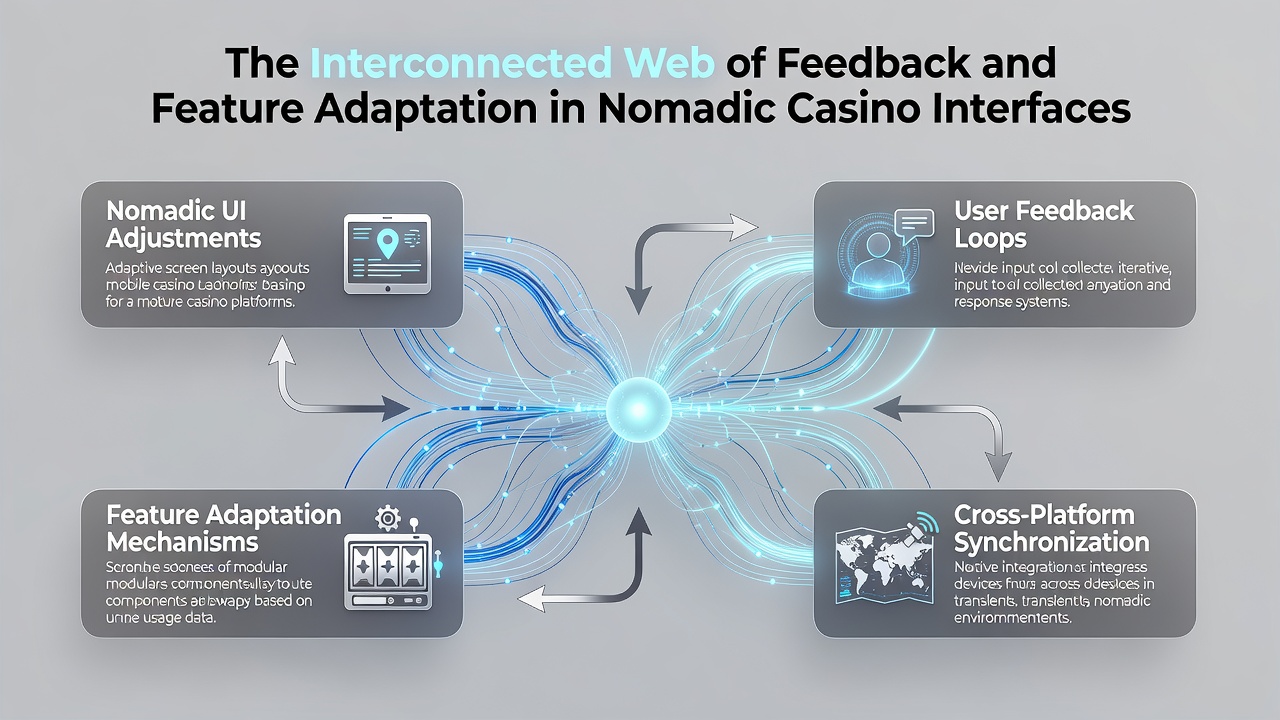
The Interconnected Web of Feedback and Feature Adaptation in Nomadic Casino Interfaces
Nomadic casino interfaces operate across portable devices where continuous data streams from player interactions feed directly into system adjustments that modify spin frequencies, reward structures, and access protocols on the fly. Researchers at institutions tracking mobile gaming patterns have documented how these platforms collect input from session durations, bet adjustments, and navigation paths, then route that information into centralized analytics engines that trigger targeted modifications without requiring full application restarts.
Data Collection Pathways in Portable Environments
Player behavior generates multiple data points that systems capture through embedded tracking modules in nomadic applications, and these modules transmit details about feature usage rates along with completion metrics for various game sequences. Observers note that verification protocols often serve as initial checkpoints where user responses influence subsequent content availability, creating pathways that link identity confirmation steps directly to personalized interface elements. Studies from the University of Nevada's gaming research division indicate that such interconnected flows have expanded notably since early mobile deployments, with data aggregation occurring at intervals that allow near-immediate responses to emerging usage trends.
Adaptation Mechanisms Driven by Feedback Integration
Once collected, feedback enters processing layers that compare current performance indicators against historical benchmarks before implementing changes to tiered content unlocks or spin mechanics. Experts have observed that adaptation occurs through modular code segments capable of updating individual components, such as altering the frequency of bonus triggers based on aggregated player completion rates across regions. This process relies on algorithms that weigh recent inputs more heavily during peak activity periods, and the result appears in updated session experiences delivered to subsequent users without disrupting ongoing play sequences.

Community Input Loops and Their Technical Effects
Community forums and in-app rating systems contribute structured responses that developers parse into actionable categories, and these categories then map onto specific interface elements like VIP progression ladders or deposit flow optimizations. According to reports from the American Gaming Association, platforms serving multiple jurisdictions have refined their adaptation protocols to account for regional preference variations, with adjustments to reward pacing emerging as one common outcome of sustained feedback analysis. Data released in August 2026 highlighted how certain nomadic applications adjusted access protocols following patterns identified in user navigation logs from the preceding quarter, demonstrating the speed at which aggregated signals translate into visible modifications.
Regulatory Frameworks Shaping Adaptation Practices
Government agencies across different territories impose requirements on how feedback data may influence game mechanics, and these rules often mandate documentation trails that connect player input to implemented changes. The National Indian Gaming Commission has issued guidance on transparency measures that affect portable platforms operating under tribal jurisdiction, while Australian regulatory bodies have examined similar data handling practices in their mobile gaming oversight activities. Such frameworks require that adaptation processes maintain auditability, ensuring that modifications to spin frequencies or content tiers remain traceable to specific feedback sources without violating privacy standards.
Technical Infrastructure Supporting Continuous Updates
Backend architectures for nomadic casino interfaces typically employ distributed servers that synchronize player data across geographic locations, and this synchronization enables consistent feature adaptations regardless of where individual users access the platform. Industry reports from the Canadian Gaming Association describe testing environments where simulated feedback scenarios help validate update stability before deployment, reducing the likelihood of unintended disruptions during live operation. Those who monitor these systems note that the infrastructure supports selective rollouts, allowing developers to introduce changes to specific user cohorts first and measure responses before broader implementation.
Conclusion
The interconnected web of feedback and feature adaptation continues to evolve as nomadic casino interfaces incorporate increasingly sophisticated data pathways that link user input directly to mechanical refinements. Regulatory developments and technical advancements shape how these processes unfold, with data from sources such as the University of Nevada research division and the American Gaming Association providing ongoing visibility into patterns of change. As platforms expand their reach across portable environments, the mechanisms that convert community responses into functional updates remain central to maintaining operational coherence across diverse user bases.