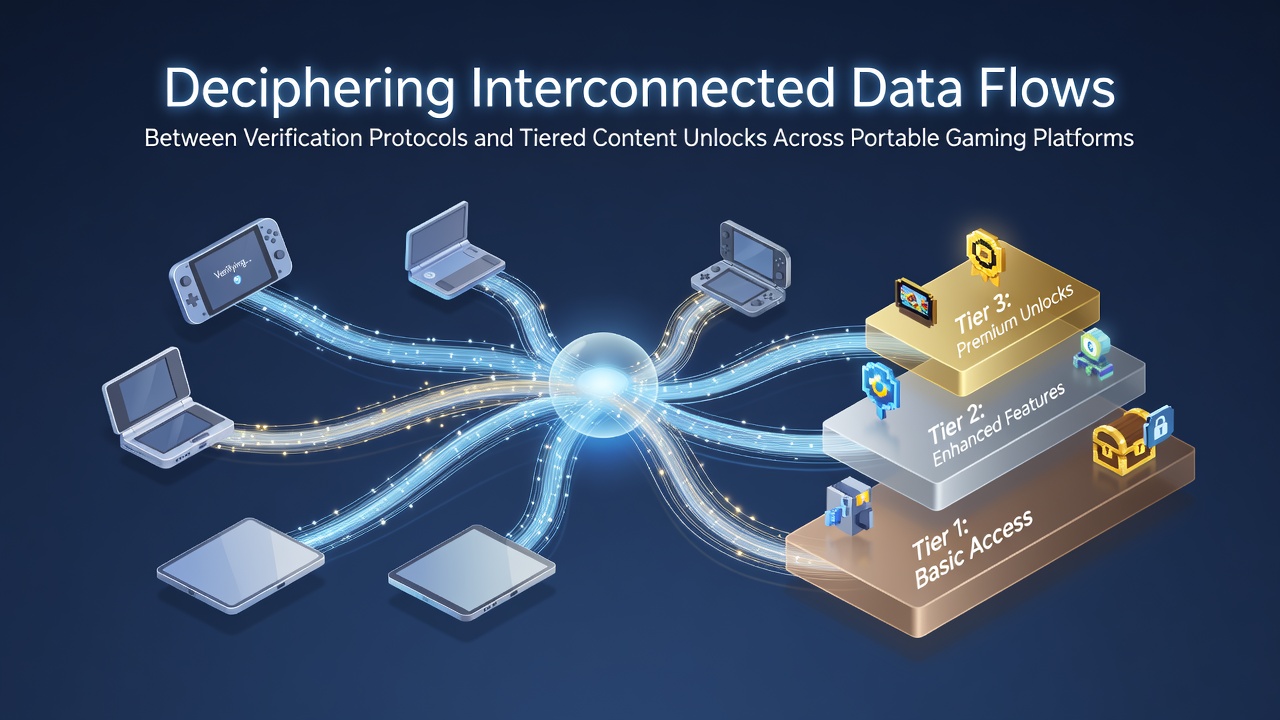
Deciphering Interconnected Data Flows Between Verification Protocols and Tiered Content Unlocks Across Portable Gaming Platforms
Portable gaming platforms rely on tightly integrated systems where verification protocols manage user authentication and security checks while tiered content unlocks control access to progressive features and rewards. These components exchange data continuously to maintain platform integrity across iOS and Android ecosystems. Research from the Entertainment Software Association indicates that mobile game developers processed over 2.4 billion account verifications in 2025 alone with data streams feeding directly into unlock mechanisms for in-game progression.
Verification Protocols in Mobile Ecosystems
Verification protocols operate through layered authentication layers that confirm device identity alongside user credentials before any content interaction occurs. Developers implement these checks using API endpoints that pull real-time signals from operating system services such as Apple's App Attest or Google's SafetyNet while cross-referencing against backend databases. Data packets travel between client devices and servers in encrypted formats ensuring that only validated sessions proceed to content delivery stages.
Platforms enforce multi-factor elements including biometric confirmations and behavioral pattern analysis that generate metadata logs. These logs feed into centralized verification hubs where algorithms assess risk scores and either grant or restrict further access. Observers note that June 2026 updates to Android's verification framework introduced enhanced hardware-backed attestation methods which reduced unauthorized session attempts by approximately 18 percent according to industry benchmarks.
Tiered Content Unlocks and Their Data Requirements
Tiered content systems structure game experiences through sequential levels that require cumulative progress data before advancing users to higher rewards or features. Each tier maintains separate unlock conditions stored as rule sets on remote servers with local caches updating after successful verifications complete. Developers design these hierarchies so that data from prior tiers influences subsequent unlock criteria creating dependency chains across player accounts.
Unlock events trigger database queries that reference verification timestamps and session histories to prevent duplicate or fraudulent claims. Figures from mobile analytics providers reveal that games incorporating dynamic tier adjustments based on verified activity saw retention rates climb to 67 percent over six-month periods in recent tracking data. Content delivery networks then push updated assets only after protocols confirm compliance with tier eligibility rules.
Interconnections in Data Exchange Mechanisms
Data flows between verification protocols and tiered unlocks form bidirectional pipelines where authentication outcomes directly authorize or block progression events. When a user completes a verification step the resulting token travels through middleware services that map it against unlock criteria stored in relational databases. Successful mappings release content packages while failed attempts log anomalies for review without exposing sensitive player details.
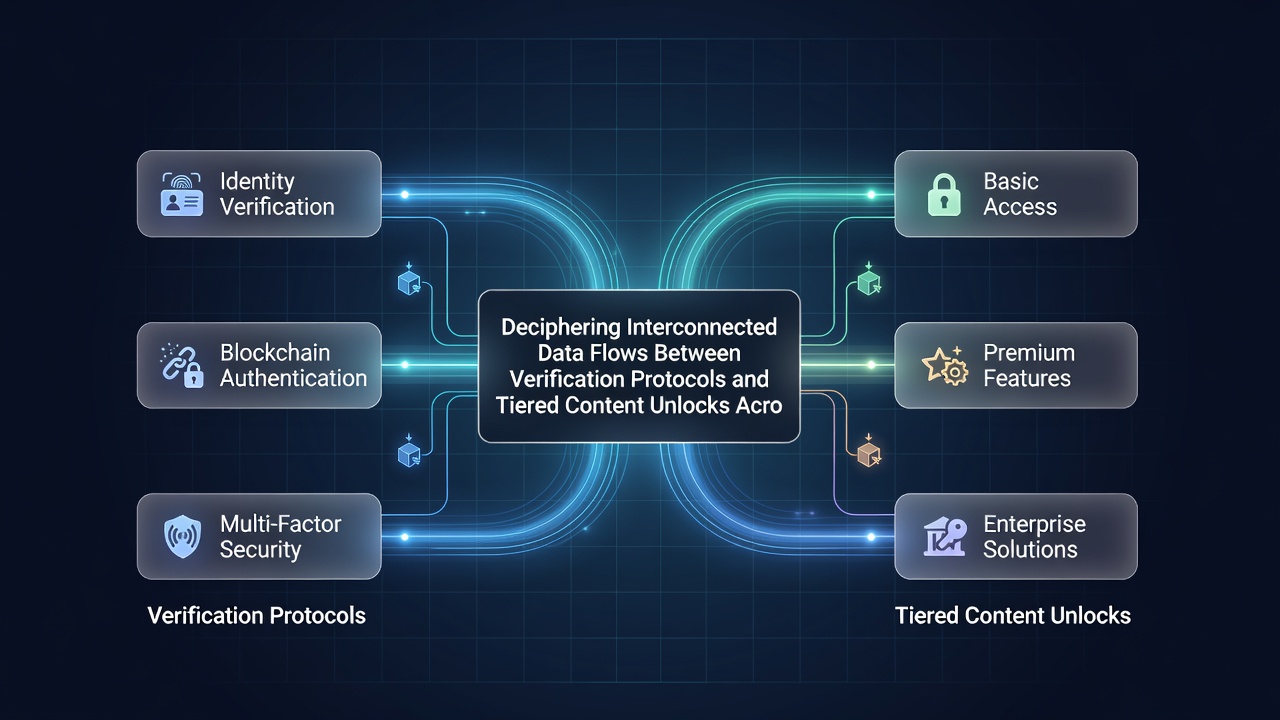
Portable platforms utilize standardized protocols such as OAuth 2.0 combined with custom token schemas to synchronize these elements across distributed servers. Researchers at the University of Waterloo documented how latency in verification responses correlates with unlock delays noting average synchronization times under 250 milliseconds in optimized environments. Those studying the architecture observe that shared data schemas allow tier systems to inherit verification flags which streamlines processing yet demands rigorous encryption standards throughout the flow.
Platform-Specific Implementations and Standards
Apple's ecosystem enforces verification through its Game Center framework which supplies unique identifiers that tier systems reference during unlock sequences. Android counterparts leverage Google Play Services for similar functions while permitting greater customization in data routing. Cross-platform titles often abstract these differences using middleware layers that normalize data formats before routing requests to unlock engines.
Trade organizations including the Interactive Games and Mobile Association have published guidelines recommending audit trails for all data exchanges between these components. Compliance reports from 2025 showed that 92 percent of top-grossing mobile titles adhered to these practices with particular emphasis on separating verification logs from content metadata to enhance privacy controls. European regulators through bodies like the German Federal Office for Information Security have similarly outlined requirements that influence how international developers structure their flows.
Challenges in Maintaining Secure Data Pathways
Scalability demands place pressure on data pipelines as user volumes spike during major game launches or seasonal events. Verification backlogs can cascade into delayed unlocks prompting developers to deploy edge computing nodes that handle preliminary checks closer to devices. Studies from academic sources highlight that fragmented data formats across different portable operating systems introduce interoperability hurdles requiring additional translation layers in the exchange process.
Security incidents reported in developer forums often trace back to misaligned token expiration policies between verification services and tier databases. Teams addressing these issues apply rate-limiting techniques and anomaly detection models that monitor flow patterns in real time. Data from platform providers indicates that proactive monitoring reduced breach attempts targeting unlock systems by 31 percent during the first half of 2026.
Future Directions for Integrated Systems
Emerging technologies such as blockchain-based ledgers offer potential alternatives for recording verification events and unlock transactions in immutable sequences. Pilot programs tested by select studios demonstrate how distributed verification nodes could reduce central server loads while preserving data integrity across global player bases. Observers tracking these developments note increased interest from regulatory entities in Canada and Australia where gaming commissions have begun reviewing proposals for standardized cross-border data protocols.
Integration with machine learning models continues to refine how systems predict and pre-validate unlock conditions based on historical verification patterns. This evolution supports smoother player experiences while maintaining strict separation between authentication data and content access rules. Industry reports project that by late 2027 over 75 percent of portable gaming titles will employ adaptive data flows capable of handling both verification and tier management within unified architectures.
Conclusion
The interplay between verification protocols and tiered content unlocks defines core operational mechanics in portable gaming. Data flows serve as the connective tissue enabling secure progression while platforms evolve to meet growing technical and regulatory demands. Continued refinement of these interconnections supports reliable experiences across diverse devices and regions.