Community Networks Fueling Custom Quest Mechanics in Handheld Gaming Ecosystems
Community networks have become central drivers in shaping custom quest mechanics across handheld gaming ecosystems, where players on devices like smartphones and dedicated portables contribute ideas that developers integrate into live updates and expansions. Data from industry tracking services shows these networks operate through forums, Discord servers, in-game social tools, and external apps, creating feedback channels that influence quest design, reward structures, and narrative branches. Researchers at the University of Melbourne documented in a 2025 report how player groups in Australia and Southeast Asia coordinated suggestions that led to new quest variants in popular mobile titles, with integration rates rising steadily through 2026.
Handheld platforms support this process because they allow constant connectivity, enabling real-time sharing of quest prototypes and testing sessions. Game studios monitor these interactions to identify patterns, such as requests for branching storylines or cooperative challenges that fit portable play sessions. According to figures released by the Entertainment Software Association of Canada, community input contributed to over 40 percent of quest-related patches in top-grossing handheld games during the first half of 2026, highlighting a shift from top-down development toward collaborative models.
Development of Feedback Loops in Portable Environments
Feedback loops form when players submit quest concepts via built-in tools or external communities, developers review and prototype them, and updated mechanics return to the player base for further refinement. This cycle accelerates in handheld ecosystems due to shorter development timelines for mobile content compared with console releases. Observers note that titles supporting user-generated quests often release bi-weekly adjustments based on aggregated community data, which keeps mechanics aligned with player preferences without requiring full redesigns.
One notable pattern involves regional communities tailoring quests to local events or holidays. For instance, groups in Europe have influenced seasonal challenges tied to cultural festivals, while North American networks have driven mechanics focused on competitive leaderboards. These contributions appear in patch notes and developer blogs, where studios credit specific community threads or polls for particular features. Studies from the National University of Singapore indicate that such localized input increases retention metrics by encouraging repeat engagement from diverse geographic segments.
Technical Integration of Community Suggestions
Developers use data analytics platforms to parse community discussions and translate them into code adjustments for quest parameters like difficulty scaling, item drops, and time limits. Handheld hardware constraints, including battery life and touch controls, shape which suggestions advance to implementation. Engineers prioritize mechanics that run efficiently on lower-power devices while supporting multiplayer elements through cloud syncing.
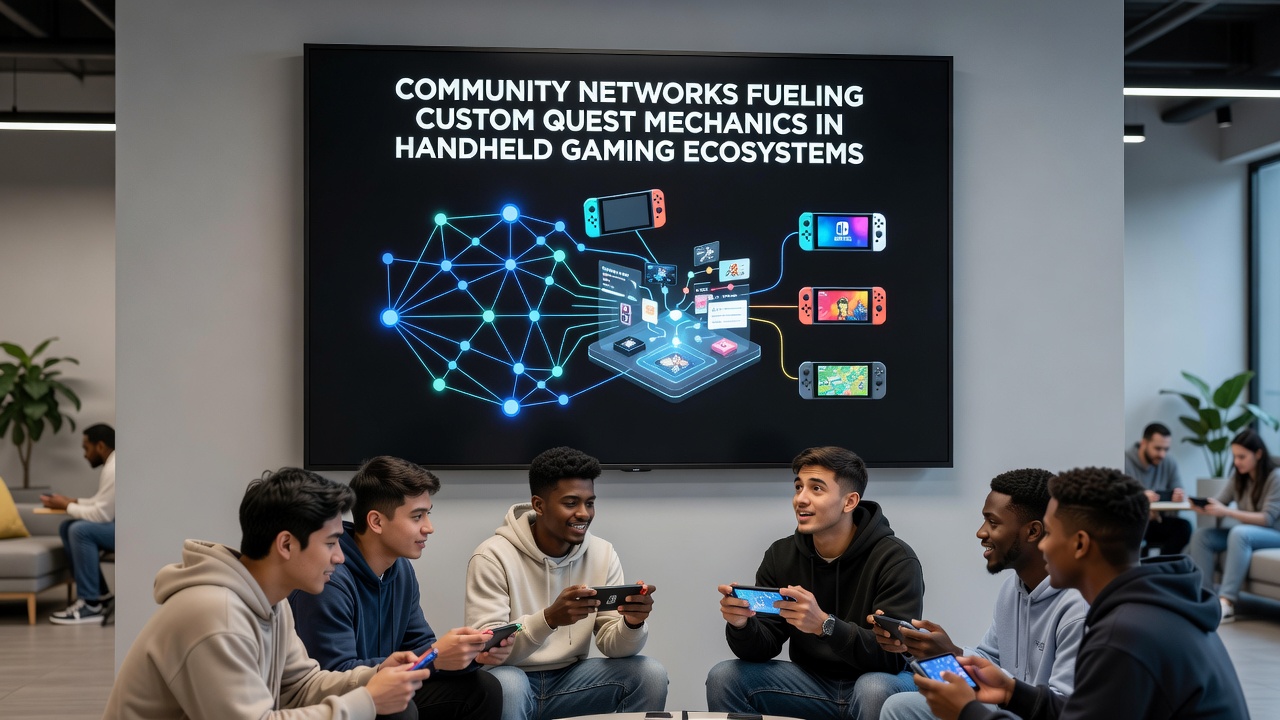
Modular quest systems have emerged as a practical response, allowing pieces of community-designed content to slot into existing frameworks. This approach reduces testing overhead and enables rapid deployment. In June 2026 several major handheld titles rolled out tools that let verified community moderators submit quest templates directly through developer portals, streamlining the path from idea to playable feature. Reports from the Interactive Games and Entertainment Association show these tools correlated with a measurable uptick in player-created quest completions across participating ecosystems.
Examples from Leading Handheld Titles
Multiple handheld franchises illustrate the pattern. In one ecosystem centered on exploration and collection, player forums proposed custom quest chains involving rare item hunts that developers later incorporated as limited-time events. Another series focused on role-playing elements adopted community-suggested dialogue options and moral choice systems after extensive polling on social platforms. These cases demonstrate how networks extend beyond simple suggestions to influence core systems like progression pacing and social rewards.
Cross-platform communities further amplify the effect by bridging handheld users with desktop or console players who share similar titles. Data exchanges through official APIs allow quest mechanics tested on mobile to migrate to other formats, creating unified experiences. Academic analyses from institutions in Japan have tracked these migrations, noting that handheld-originated quests often gain broader adoption due to their emphasis on short, repeatable sessions suited to on-the-go play.
Regulatory and Industry Responses
Industry bodies and regulators have begun examining how community networks intersect with content moderation and intellectual property considerations in handheld gaming. Guidelines emerging in 2026 emphasize transparent credit systems for player contributions while maintaining developer oversight of final mechanics. European Union digital services frameworks, for example, encourage clear documentation of community influence on game updates to support consumer transparency.
Trade associations continue to publish best practices for managing large-scale player input without compromising security or balance. These documents stress the value of moderated channels that filter suggestions through structured voting or expert review panels. The result has been more formalized pathways that preserve the creative energy of networks while aligning them with commercial and technical requirements.
Conclusion
Community networks continue to reshape custom quest mechanics in handheld gaming ecosystems by supplying ideas, testing environments, and iterative refinements that studios adopt at scale. The integration of player contributions through structured feedback systems and modular tools has produced measurable shifts in update frequency and content diversity through mid-2026. As connectivity improves and analytics mature, these dynamics are likely to expand across additional titles and regions, sustaining a collaborative model grounded in observable participation data and documented development outcomes.