Charting Verification Pathways That Unlock Progressive Rewards in Regulated Mobile Quest Gaming Platforms
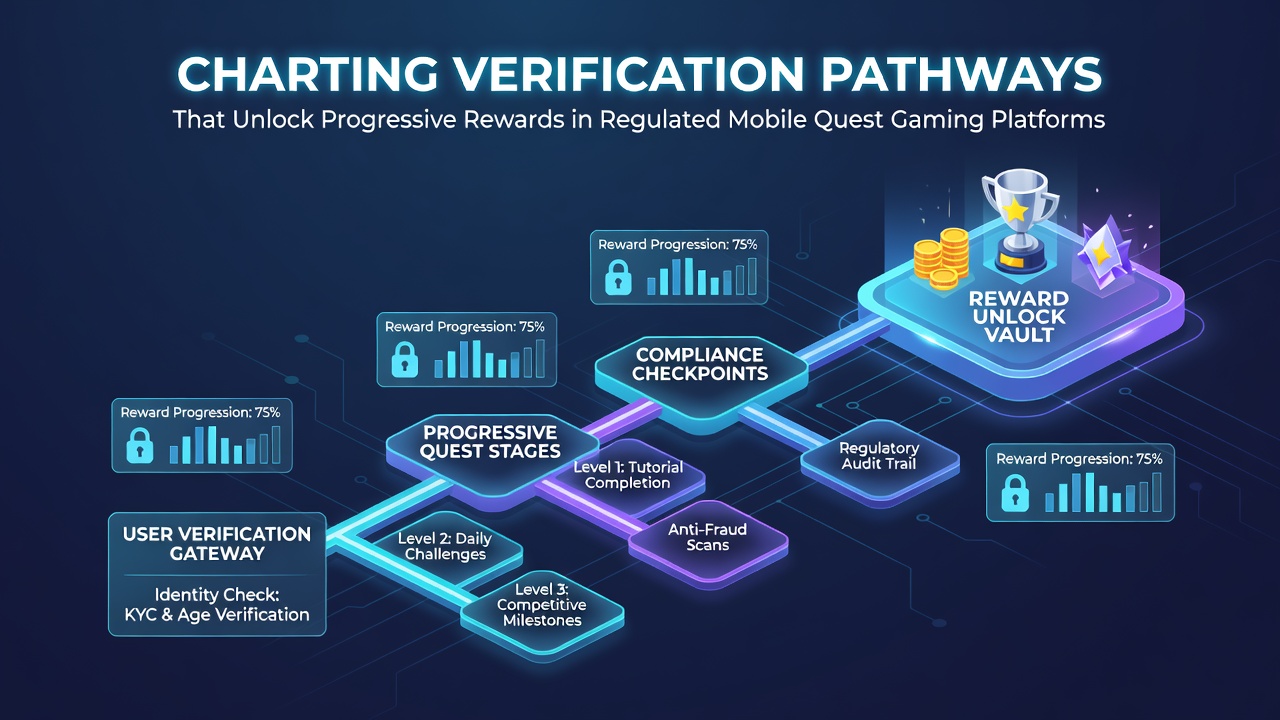
Verification pathways in regulated mobile quest gaming platforms operate as structured sequences that confirm user identity, location, and eligibility before releasing progressive rewards tied to completed quests, and these systems draw on data from multiple sources to maintain compliance across jurisdictions. Platforms integrate identity checks at key milestones so that users who advance through quest chains gain access to tiered incentives including virtual items, currency multipliers, and exclusive content unlocks while operators satisfy licensing conditions set by regional authorities.
Core Components of Verification Sequences
Operators establish initial registration steps that collect basic profile data followed by document uploads or biometric confirmations which then trigger automated validation against government databases and watch lists, and subsequent quest completions prompt additional location or activity verifications to prevent unauthorized reward distribution. Researchers at institutions such as the University of Nevada Reno have documented how these layered checks reduce discrepancies between reported player activity and actual platform usage, with figures from 2025 indicating a 23 percent drop in compliance incidents after multi-factor protocols became standard in several North American markets.
Progressive Reward Structures and Unlock Mechanics
Quest systems assign points or badges upon task completion, yet access to higher reward tiers requires passage through verification gates that confirm ongoing eligibility, and this design creates a direct link between sustained compliance and expanded benefit levels. Data from industry reports compiled by the European Gaming and Betting Association shows that platforms employing staged verification saw average session lengths increase by 18 percent during the first half of 2026, because users who cleared each checkpoint gained immediate access to enhanced quest lines and cumulative reward multipliers.
Regulatory Milestones Effective in September 2026
New technical standards scheduled for September 2026 in select Australian and Canadian provinces require real-time verification updates whenever a player crosses reward thresholds above a defined value, and these rules aim to align mobile quest mechanics with broader responsible gaming obligations. Observers note that platforms already testing these protocols report smoother integration with existing payment rails because verification data feeds directly into transaction monitoring systems, reducing separate audit cycles.
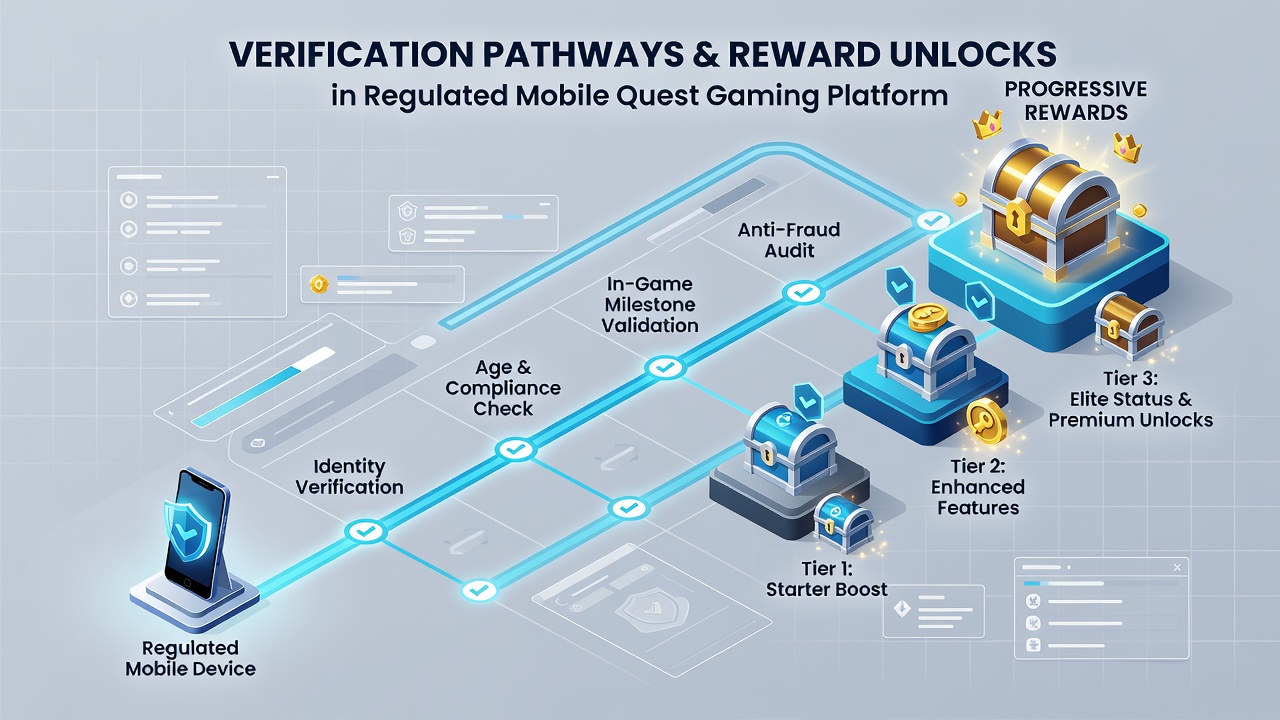
One operator in the Asia-Pacific region implemented a continuous verification model that rechecks device signatures and IP locations at the start of every major quest arc, and internal metrics indicated that reward claim success rates rose to 94 percent once users understood the predictable checkpoint rhythm. The Gaming Standards Association published guidelines in early 2026 that outline minimum encryption and audit trail requirements for these verification events, providing a template that multiple jurisdictions have begun to reference.
Integration Patterns Across Platforms
Developers embed verification logic within the quest engine so that each milestone completion automatically queues the next required check without interrupting gameplay flow, and this approach minimizes user friction while satisfying regulatory reporting demands. Studies conducted by the National Council on Problem Gambling in the United States reveal that transparent communication about verification timing correlates with higher retention rates, as players receive clear notices about which documents or confirmations will unlock the subsequent reward tier.
Security and Data Handling Practices
Encryption protocols protect transmitted verification data during transmission to third-party services, and operators maintain audit logs that record every checkpoint outcome for regulatory review periods that can extend up to seven years depending on the licensing jurisdiction. Figures released by the Alcohol and Gaming Commission of Ontario indicate that platforms adopting end-to-end encrypted verification pathways experienced a 31 percent reduction in data exposure incidents between 2024 and 2026 compared with earlier implementations that relied on batch uploads.
Conclusion
Verification pathways continue to evolve as central mechanisms that connect user progression through quest structures with the controlled release of progressive rewards in regulated mobile environments, and ongoing adjustments in September 2026 reflect coordinated efforts among regulators, standards bodies, and platform operators to balance accessibility with compliance requirements. The patterns observed across multiple regions demonstrate that integrated verification supports both operational integrity and sustained player engagement when implemented with consistent timing and clear communication.